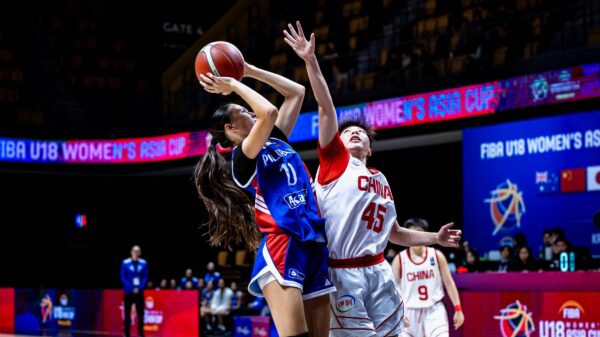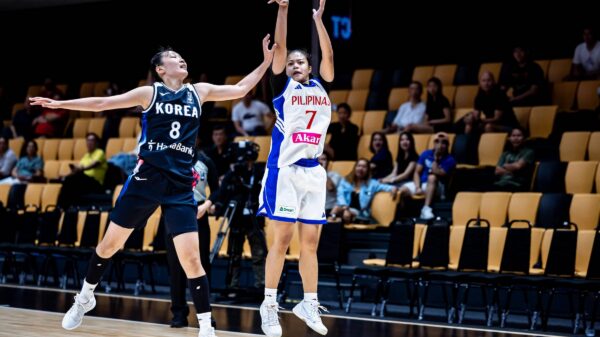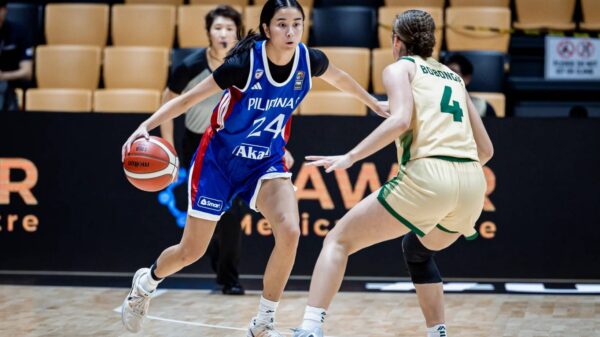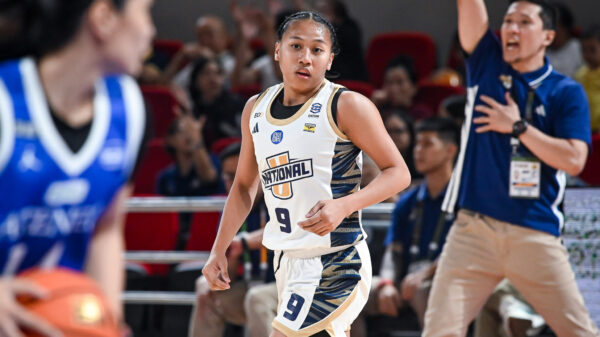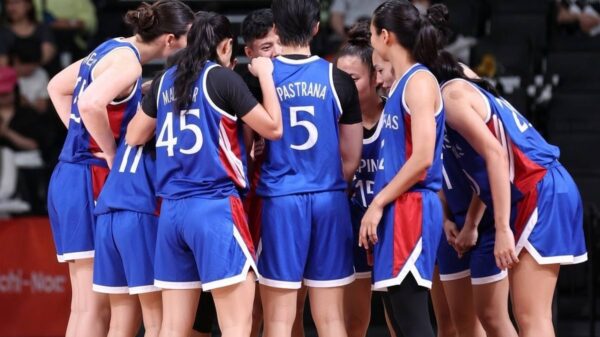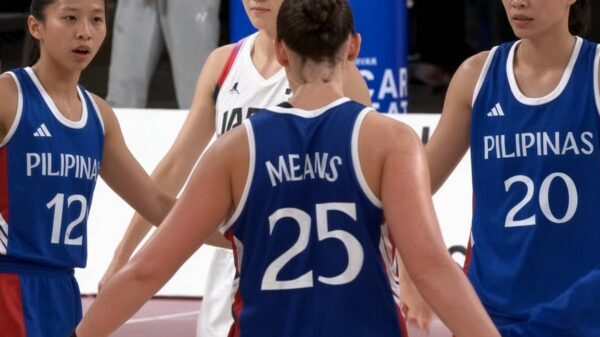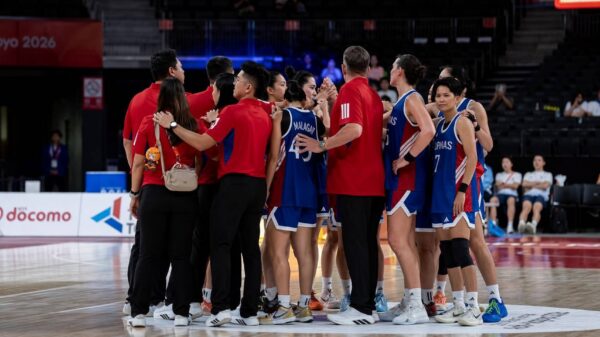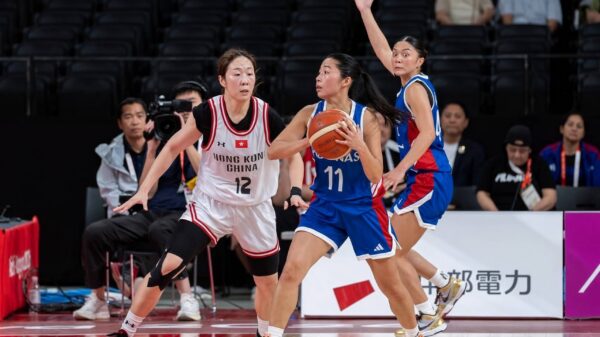







































































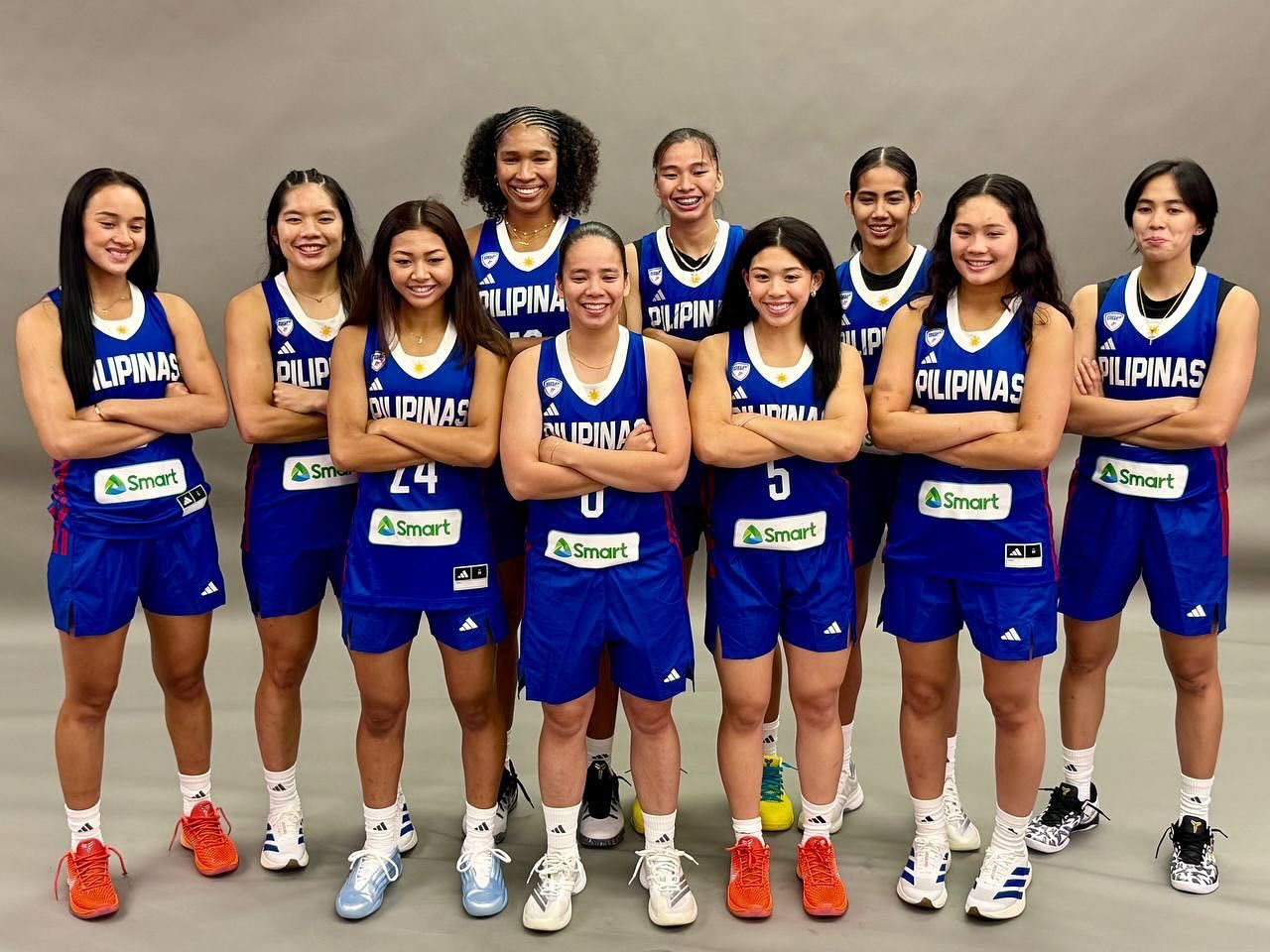

A sixth-place finish — matching their result in the 2023 FIBA Women’s Asia Cup — will be enough to secure Gilas Pilipinas Women a spot in the 2026 FIBA Women’s World Cup qualifying tournaments.
But if the Filipinas can surpass that mark, they will deliver the country’s best-ever finish in the top-tier women’s basketball competition in the Asian region.
The 2025 FIBA Women’s Asia Cup tips off this Sunday, July 13, in Shenzhen, China, with eight teams divided into two groups.
The top team from each group will automatically advance to the semifinals.
The second- and third-placed teams will battle it out in the crossover quarterfinals, while the bottom teams will face off for 7th place. The loser of that classification match will suffer the ignominy of relegation to Division B of FIBA Asia.
For Gilas Women, one win in the group stage could be enough to book a spot in the quarterfinals — and more importantly, a ticket to the 2026 World Cup qualifiers.
But it won’t be easy for Coach Patrick Aquino and his squad.
The Philippines opens its campaign against world No.2 Australia.
The Opals are coming off a bronze-medal finish at the 2024 Paris Olympics, where they scored big wins over world No.7 Canada, host and world No.3 France, and world No.8 Serbia.
Only Team USA stood in their way in the semifinals, but they bounced back to edge world No.6 Belgium, 85-81, for the bronze.
However, Australia is fielding a significantly different lineup for the Asia Cup. Half of their Olympic roster is currently playing in the WNBA, while four others were not selected. Only 5’11” guard Isobel Borlase and 6’4” forward Cayla George — a WNBA veteran and the 2023 WNBL MVP — return from their Paris squad.
Gilas will be tested again on Monday when they face world No.9 and 2023 FIBA Asia Cup runners-up Japan.
Like the Opals, Japan has also retooled its roster, retaining just four players from its Olympic team. Missing are star guard Mai Yamamoto, who was named to the 2023 FIBA Asia Cup Mythical Five; and record-setting playmaker Rui Machida, who dished out 18 assists in Japan’s semifinal win over France at the Tokyo Olympics.
Still, Japan’s lineup is no pushover. Back in the fold are 6’0” forward Stephanie Mawuli (who plays for Zaragoza in Spain), 6’1” center Maki Takada, 6’0” shooter Yuki Miyazawa, and 5’9” forward Nanako Todo. Takada, 35, averaged 15.3 points per game in the Olympics, while Mawuli — whose parents are Ghanaian — is a strong presence on both ends.
Lebanon Clash Looms as Do-or-Die Showdown
(C) FIBA.Basketball
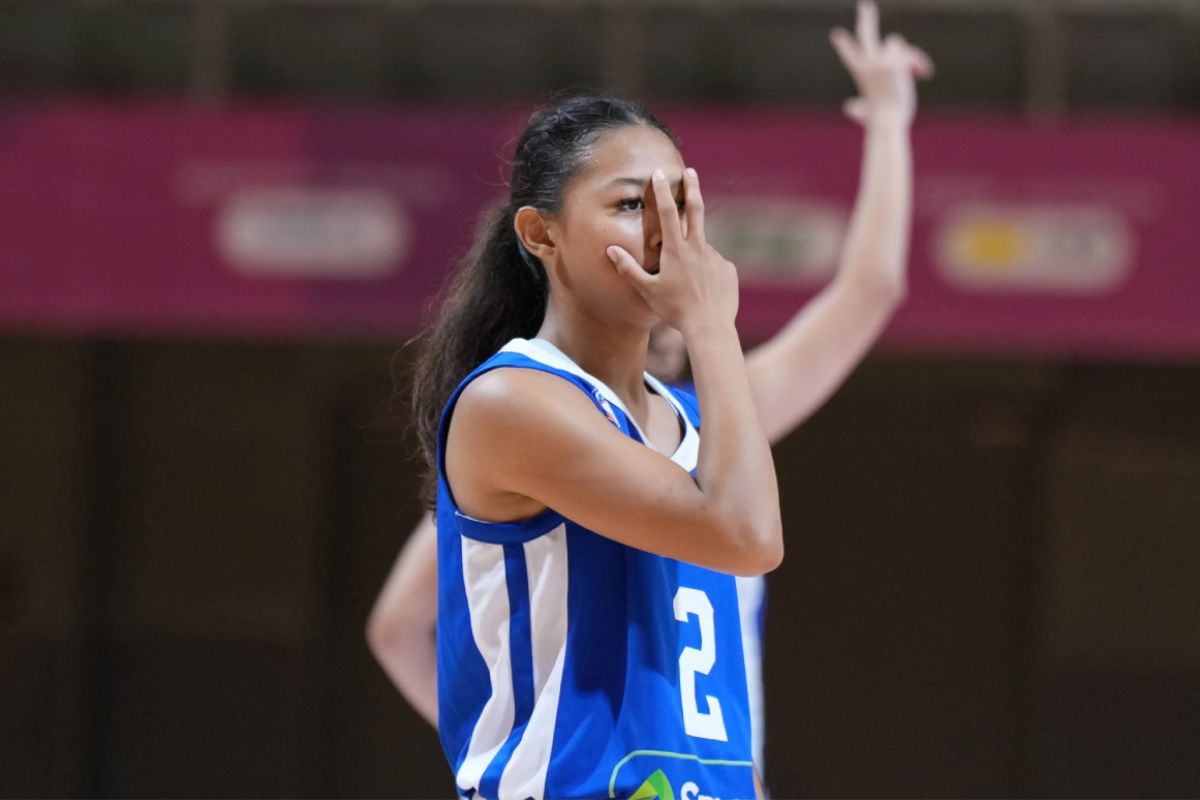
Gilas concludes the group stage with a potentially do-or-die matchup against Lebanon on Wednesday, July 16.
Ranked 54th in the world, Lebanon is the second-lowest ranked team in the tournament, ahead of No.57 Indonesia but below the Philippines, currently at 44th.
Lebanon, however, boasts a significant height advantage. Five players stand 6’0” and above, including 6’3” NCAA Division I center Zena Elias and newly naturalized forward Jillian Archer, a 6’2” pro who has played in Australia and Greece.
They’re joined by 6’2” center Melody Saneh, 6’0” rising star Maygen Naasan (who averaged 14.8 points in the 2024 FIBA U18 Asia Group B), and 6’0” forward Maria Ghaleb of Wayland Baptist University in Texas. For the Philippines, only Jack Animam and Kacey Dela Rosa stand taller than 6’0”.
In the 2023 edition, Gilas suffered heavy defeats at the hands of Australia (34-105) and Japan (57-95), but rebounded well with a rousing 92-81 win over Chinese Taipei and respectable performances against New Zealand (78-83) and South Korea (71-80).
Gilas’ steady progress was also on full display during the FIBA Women’s World Cup Pre-Qualifying Tournament in Rwanda in August 2024, where they nearly stunned world No.10 Brazil before falling just short, 74-77.
Even with retooled rosters, both Australia’s Opals and Japan’s Akatsuki Five remain dangerous and disciplined squads.
For Gilas to stand a chance, they must play near-perfect basketball — where Vanessa de Jesus dictates the tempo, sharpshooter Khate Castillo catches fire, and Jack Animam dominates the paint.
That makes the Lebanon game a must-win.
Archer, while not a prolific scorer, is a physical presence who could cause matchup problems. Dela Rosa, Angel Surada, or even Louna Ozar may be tasked to contain her. But despite Lebanon’s size, they likely have no answer for Animam.
The 6’5” Gilas center has battled elite frontlines throughout her pro career and will pose serious problems for the Cedars with her strength, experience, and ability to draw fouls.
Lebanon will look to their backcourt duo of 32-year-old veteran Rebecca Akl and 20-year-old rising star Aman Mansour. Akl has long been the heart and soul of Lebanese basketball, averaging double-digit points in FIBA play since 2017, while Mansour is poised to take up her mantle in the near future.
But Gilas is equipped with a deep guard rotation — De Jesus, Naomi Panganiban, Ella Fajardo, Sumayah Sugalong, and Cielo Pagdulagan — all capable of pressuring and tiring out Lebanon’s primary ballhandlers.
Quarterfinal Door Still Within Reach
(C) FIBA.basketball
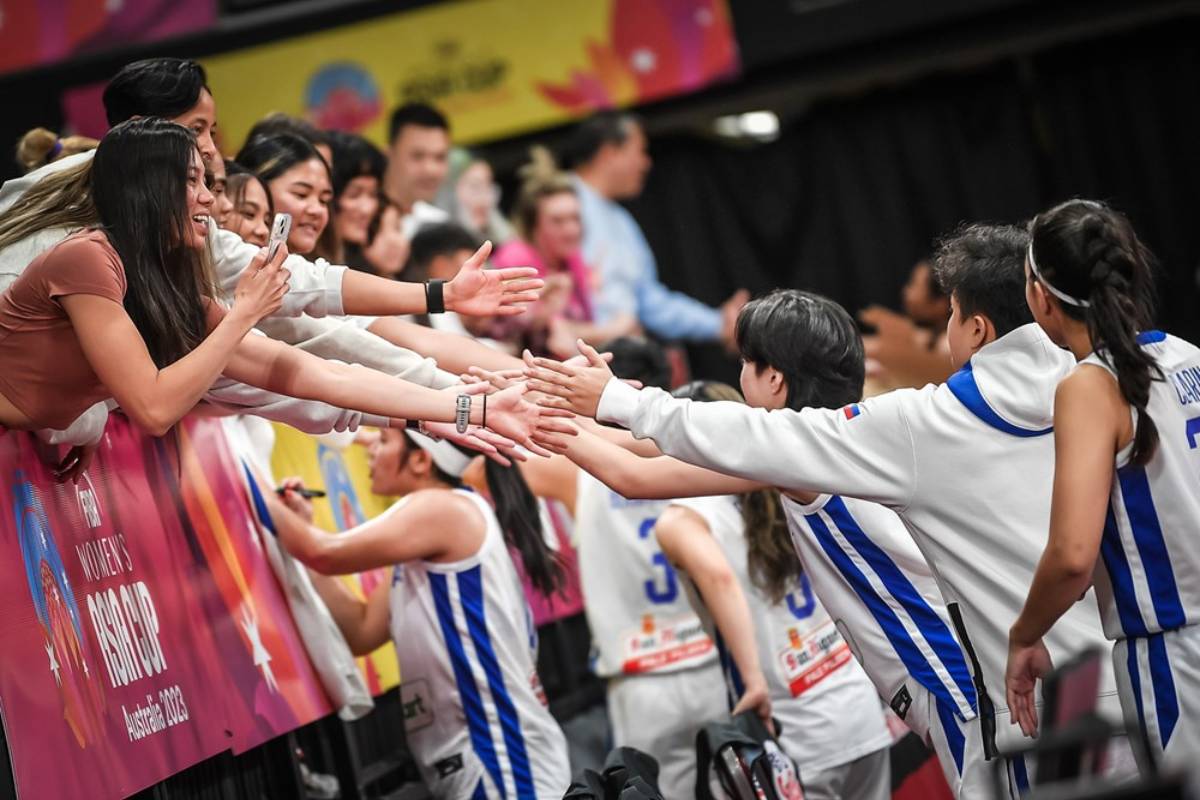
A win over Lebanon will likely set Gilas up for a quarterfinal rematch with either New Zealand or South Korea, assuming China tops the other group.
Both matchups offer a more balanced playing field, and Gilas’ recent performances suggest they’re capable of pulling off a surprise.
New Zealand beat the Philippines by just five points in 2023, while South Korea also found themselves tested by Gilas.
With continued growth, added international exposure, and more cohesion from Aquino’s squad, this might be the breakthrough moment the program has long waited for.
But before dreaming of quarterfinals, the team must take care of the basics — minimize turnovers, capitalize on their outside shooting, and rely on their defensive grit.
Gilas must prove they’ve learned from the heartbreaks of past tournaments and now have the mental toughness to finish the job.
One win may be all it takes — but that one win could mean everything.