
































































































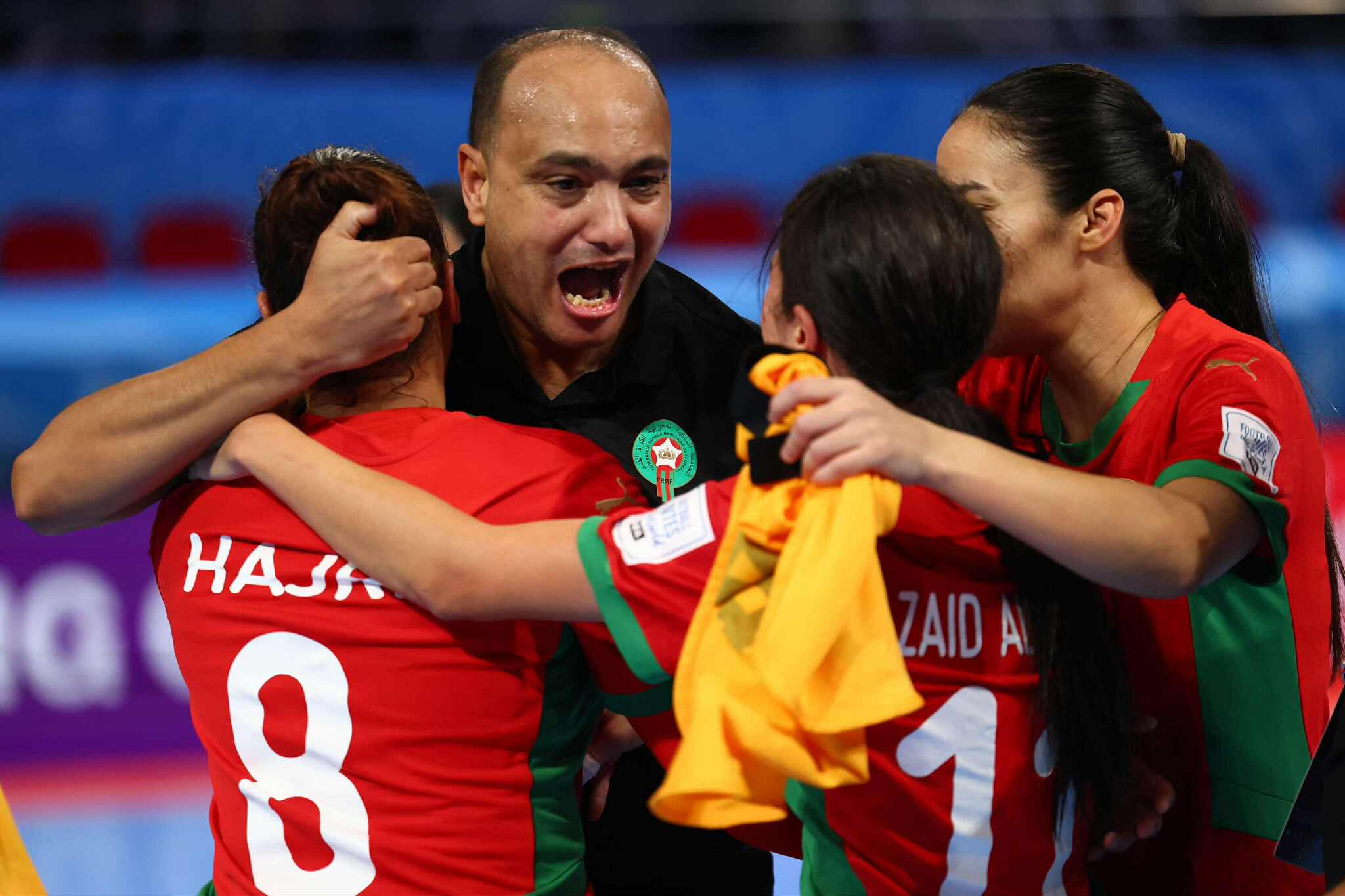

Morocco’s dream run in the 2025 FIFA Futsal Women’s World Cup may have ended with a 6-1 quarterfinal loss to global powerhouse Spain last Monday at the PhilSports Arena in Pasig, but the feeling of fulfillment lingered.
Despite the lopsided scoreline, coach Adil Sayeh considered the campaign a success.
Leading the world No.31 squad — the only non-top-10-ranked team in the final eight — Morocco achieved a historic finish that Sayeh hopes will spark the creation of a domestic futsal league back home.
The 49-year-old mentor acknowledged the vast experience gap between his team and the world’s second-ranked Spanish side, but emphasized that reaching the quarterfinals was itself a monumental achievement.
It demonstrated that Moroccan players, even without a formal futsal infrastructure, have the talent and potential to compete internationally.
“I think today’s game was very hard because we were playing against the second team in the world,” he said. “We knew it would be a tough match. We don’t have much experience, but we learned a lot from this journey.
“The fact that we played in the quarterfinals is an honor for our players and our country. We don’t have a futsal league or dedicated futsal players — we only brought football players — but we showed that we can achieve something. If we start a futsal league, I believe we can become a very strong team in the future.”
Sayeh is confident that Morocco’s achievement will inspire the next generation of female athletes in the country. He highlighted the national team’s group-stage wins over the host nation and Poland as proof of the squad’s potential and a clear signal for urgent investment in the sport.
“The fact that we played in the World Cup quarterfinals will have a very positive impact on all the girls in Morocco,” he said.
“Now, we need to start a futsal league and focus on developing young players, so we can build a strong team for the future. I believe the future of futsal lies in Africa.”
Sayeh concluded by expressing heartfelt gratitude to the host nation, noting that the warmth and hospitality of the Filipino people, as well as the work of the organizers, made the journey unforgettable.
“The Philippines is an amazing country with lovely people. I would like to thank everyone here — the government and all those working behind the scenes for this World Cup. Thank you,” he said.