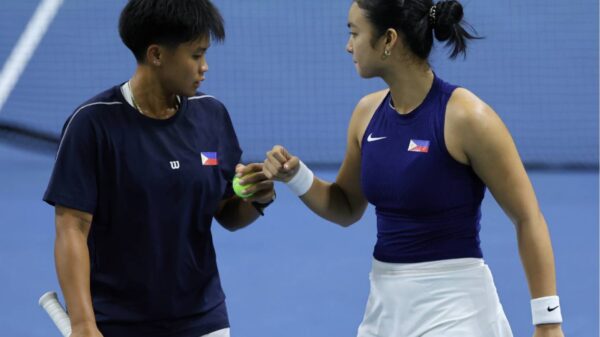
































































































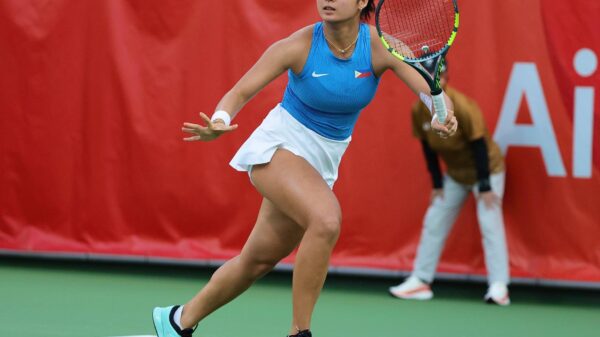









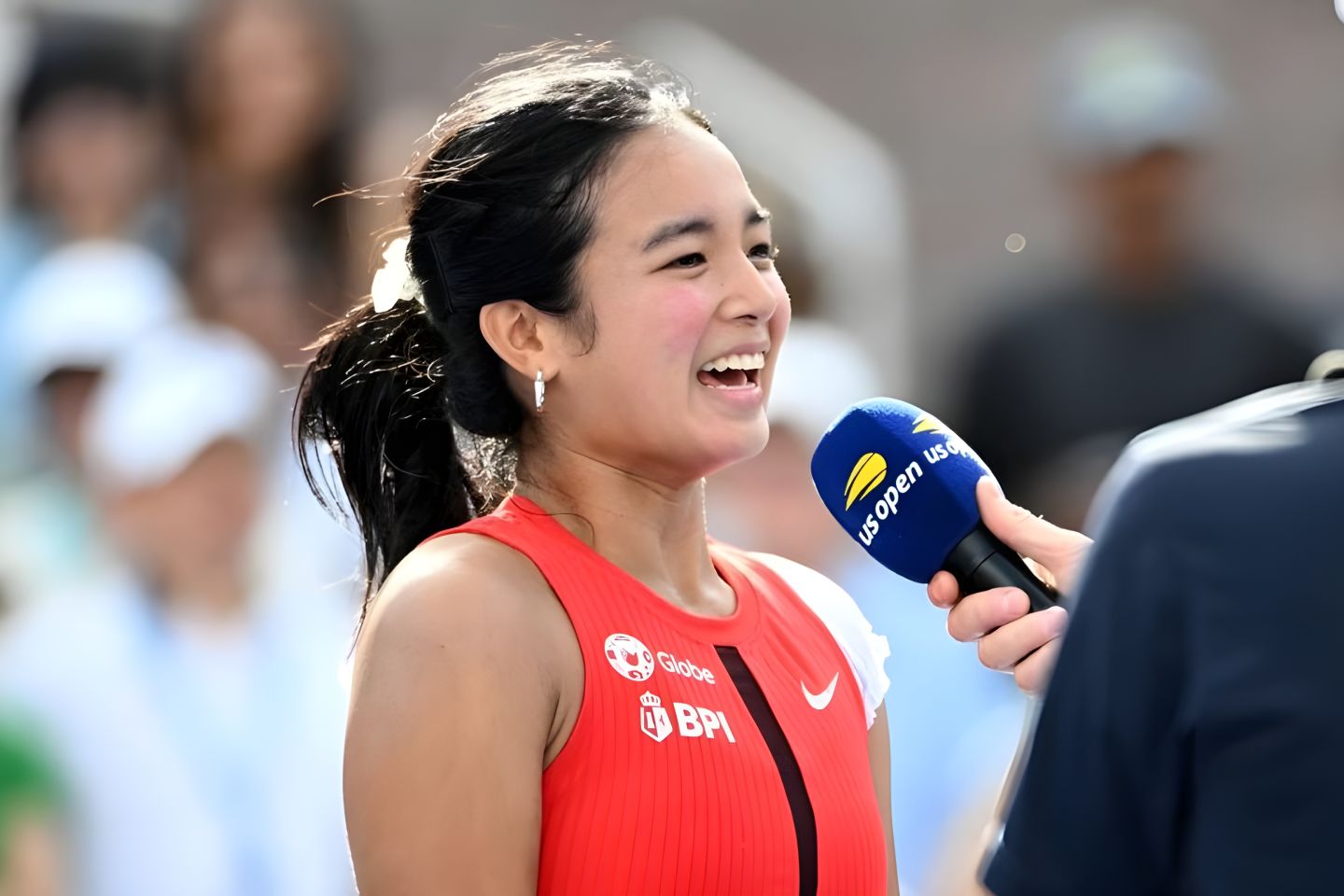

Alex Eala is about to experience several firsts when she returns to the court on early Thursday morning (Manila time) at the USTA Billie Jean King National Tennis Center in New York.
The 20-year-old Filipina tennis star will make more history as she competes in the second round of the US Open — her deepest run yet in a Grand Slam event.
Earlier this year, she bowed out in the first round of both the French Open and Wimbledon.
For the first time in a major tournament, the world No. 71 Eala enters as a slight favorite, going up against Spain’s world No. 95 Cristina Bucsa.
Bucsa showed promise at Wimbledon last July, scoring straight-set victories over Romania’s Anca Todoni and 22nd seed Donna Vekic of Croatia. She then fell in a gritty three-set third-round match to Argentina’s top player, Solana Sierra.
However, Bucsa has struggled since that run. She fell in the qualifiers of the WTA 500 Washington Open and suffered first-round exits in three consecutive tournaments: the Canadian Open, Cincinnati Open, and Monterrey Open.
Eala and Bucsa have met before.
In 2021, at the $25,000 ITF Trophee de la Ville tournament in Grenoble, France, a then-15-year-old Eala came back from a set down to defeat the 23-year-old Bucsa, 2-6, 6-3, 7-6 (8), in a tense second-round battle.
Still, this doesn’t guarantee an easy path for Eala.
Bucsa is a proven competitor on hard courts, winning the WTA Open BLS de Limoges Challenger and three of her four ITF titles on the surface.
She is also a strong doubles player, ranked No. 35 in the world, with seven WTA doubles titles and a bronze medal for Spain in the women’s doubles at the 2024 Paris Olympics.

(C) US Open
Known for her all-around game, Bucsa thrives in extended baseline rallies and isn’t shy about attacking the net to shorten points.
But while she is aggressive, her style is not unfamiliar to Eala, who recently faced elite opponents such as world No. 14 Clara Tauson and Grand Slam champions Marketa Vondrousova and Barbora Krejčíková. Those matchups should give Eala confidence to dictate the pace and take calculated risks.
Bucsa lacks the same level of power and shot variety that could trouble Eala.
Another potential weakness for Bucsa is her serve. Over her last eight matches, her first-serve percentage has hovered at just 54%. This plays into Eala’s strength as an excellent returner, particularly adept at punishing second serves and immediately putting opponents on the defensive.
Eala, while not known for a booming serve, compensates with heavy spins that create awkward bounces and angles. She’s been consistent, landing close to 65% of her first serves in her past eight matches.
Bucsa has the foot speed and defensive skills to extend rallies, but she lacks weapons that could truly hurt Eala.
As long as Eala maintains her focus and builds on the momentum from her opening-round victory, she has the tools to move past Bucsa and advance to the US Open’s third round.