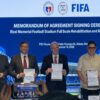




















































































































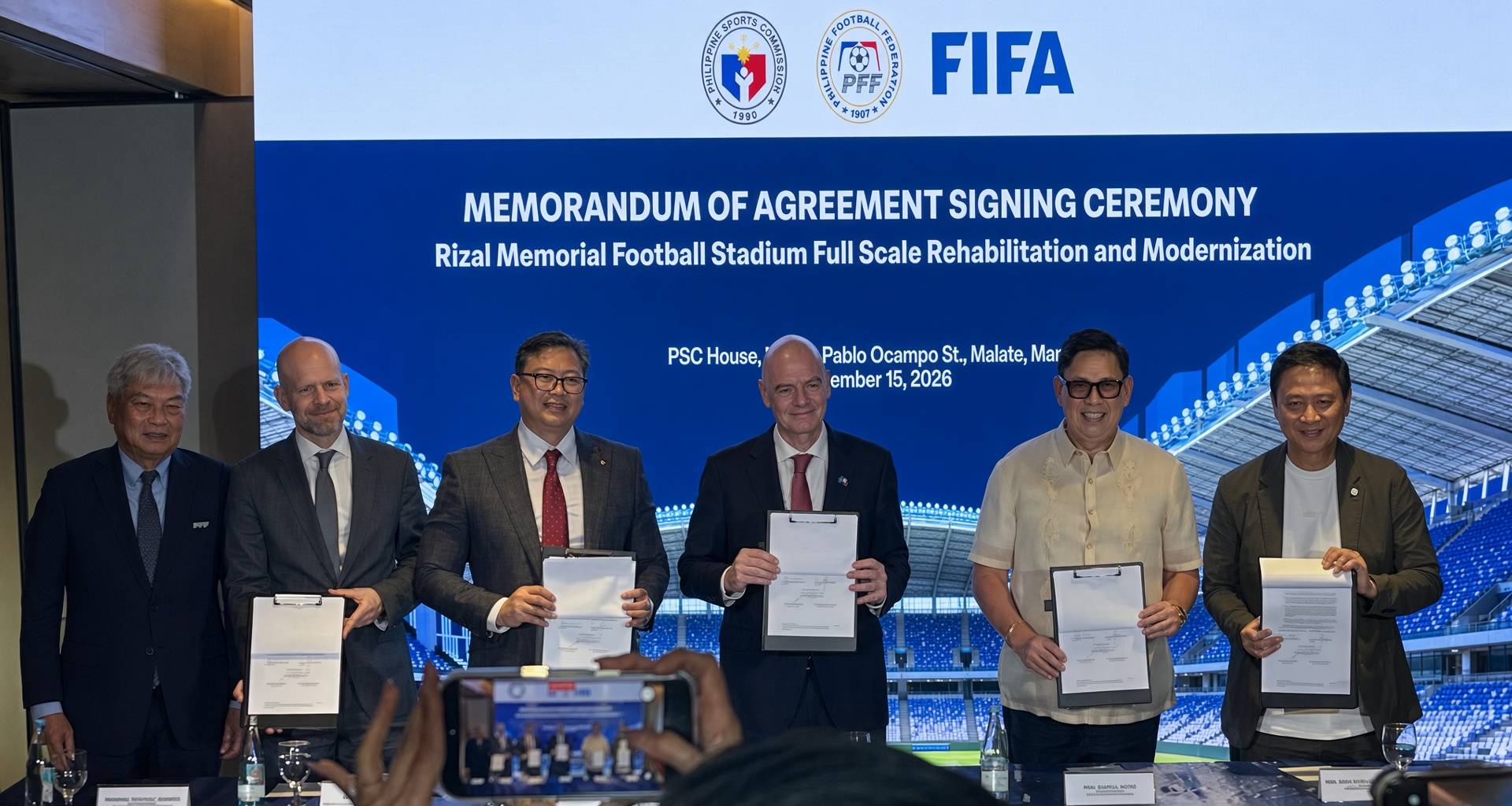

Philippine football is set for a transformational leap after FIFA President Gianni Infantino signed a memorandum of agreement with the Philippine Sports Commission and the Philippine Football Federation for the redevelopment of the historic Rizal Memorial Stadium.
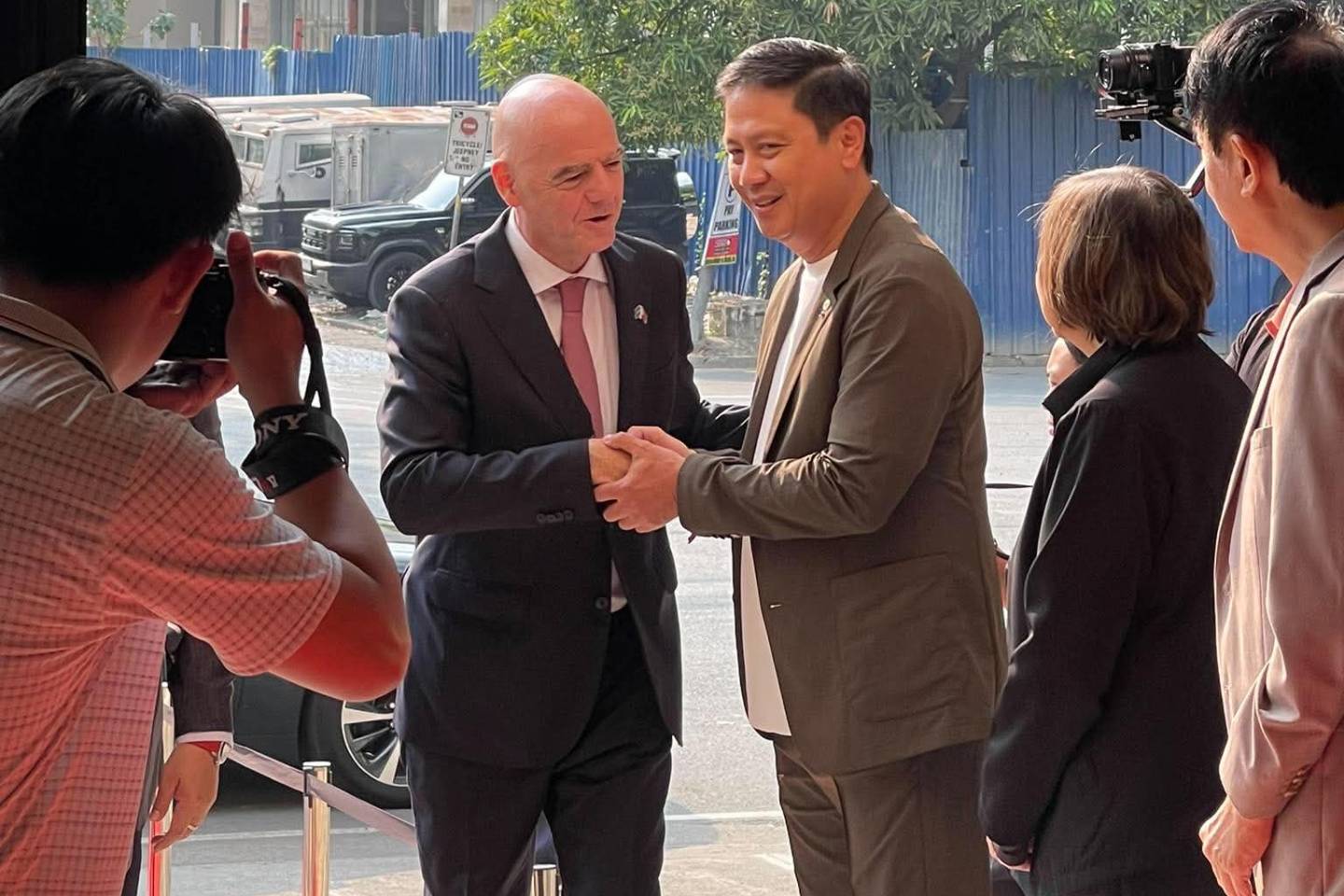
PSC Chairman Patrick Gregorio and PFF President John Anthony Gutierrez signed the landmark agreement with Infantino at the PSC House inside the Rizal Memorial Sports Complex in Manila on Sunday, witnessed by Executive Secretary Ralph Recto.
Infantino announced that the Philippines will receive US$25 million from FIFA to fund the major renovation of the historic football venue and the construction of three regional football training centers across the country, all at no cost to the government. The investment comes following the country’s successful hosting of the inaugural FIFA Women’s Futsal World Cup in 2025.
Infantino said the project reflects FIFA’s belief that football should be accessible to everyone, everywhere.
“We don’t want emerging countries to just watch football on TV. We want every country to be part of football, to be part of top football, to be part of world football,” he said.
“Today a stadium is a symbol. It’s a symbol of a country that wants to project itself into the future,” Infantino said. “To build a stadium is to give a smile, to give happiness, to give hope to a whole country.”
Gutierrez said the redevelopment of RMS is among the most significant benefits the country has gained from hosting the tournament, adding that the Philippines has played an important role in FIFA’s continued global growth and success.
“FIFA is successful around the world, and the Philippines was a big part of that because we hosted the first-ever FIFA Women’s Futsal World Cup. And because of that success, this donation from FIFA will help us rebuild the Rizal Memorial Stadium,” said Gutierrez.
The redevelopment will mark the stadium’s first major renovation since it opened in 1934.
(C) PSC
For Gregorio, the agreement represents a milestone not only for football but also for Philippine sports infrastructure as a whole.
“We are able to reap the success of the nation’s hosting of the FIFA Women’s Futsal World Cup,” said Gregorio. “We will now have a beautiful football stadium that we can really be proud of and can host big international competitions.”
Once completed, the venue will have a seating capacity of 25,000 and feature state-of-the-art facilities. It will also serve as the new home of the PFF while positioning the country to host major international football tournaments.
Aside from the stadium renovation, FIFA’s funding will also cover the establishment of three regional football training centers in Luzon, Bacolod City in the Visayas, and Cagayan de Oro in Mindanao.
Each center will feature three full-sized football pitches situated side by side, along with dormitory facilities designed to accommodate athletes and teams undergoing training.
Gutierrez said the regional training centers will strengthen football development nationwide by making world-class facilities more accessible to aspiring players outside Metro Manila.
“These regional training centers will allow young athletes to train closer to home and help develop football across the country. They can also host international youth tournaments while making it easier for parents to support and visit their children,” he said.
The PFF chief emphasized that the FIFA Women’s Futsal World Cup has already delivered tangible and lasting benefits to Philippine football, with the latest investment expected to create more opportunities for future generations of players and other stakeholders.
“We are thankful to FIFA President Gianni Infantino for sharing the graces of FIFA with the Philippines, so now we are able to rebuild,” Gutierrez said. “All 211 FIFA member countries benefit from FIFA’s success, and today the Philippines is seeing the rewards of being an active part of the global football community.”
Gregorio explained that the redevelopment of the Rizal Memorial Football Stadium is part of a broader master plan to modernize the entire Rizal Memorial Sports Complex.
The initiative includes the proposed PSC Plaza fronting SM Harrison and the development of a pedestrian walkway connecting LRT Taft Avenue to Adriatico Street through the sports complex, creating a more integrated and accessible sports district in the heart of Manila.
The PFF will spearhead the stadium refurbishment and work closely with the PSC engineering team to ensure that existing jogging paths and pedestrian areas are seamlessly incorporated into the new design.
Gutierrez also recalled the intense competition to host the inaugural FIFA Women’s Futsal World Cup, noting that the Philippines prevailed over bids from Italy, Lithuania, Portugal, Poland, and Brazil.
He credited the strong support of the Philippine government as a decisive factor in securing the hosting rights.
“We wanted to show FIFA that we want to play our part,” said Gutierrez. “Part of the bidding process was a government guarantee for you to be able to bid, and the other countries couldn’t provide that.”
Backed by FIFA and strengthened by the partnership between government and football leaders, the redevelopment of the Rizal Memorial Stadium and the construction of regional training centers are expected to accelerate the growth of Philippine football.
The projects will stand as a lasting legacy of the country’s successful hosting of the inaugural FIFA Women’s Futsal World Cup and help inspire future generations of Filipino footballers.