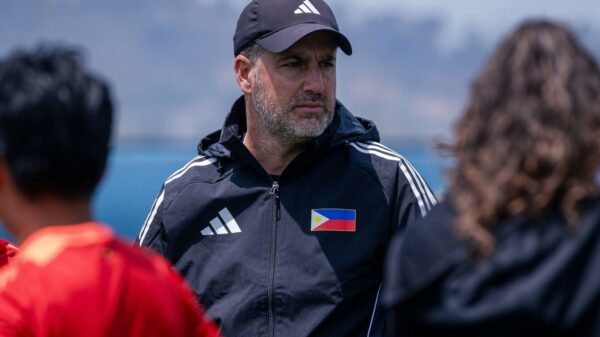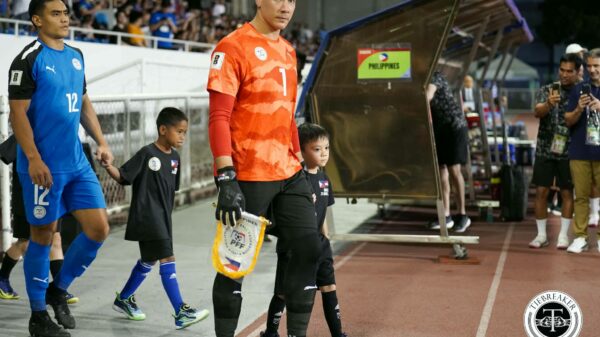


























































































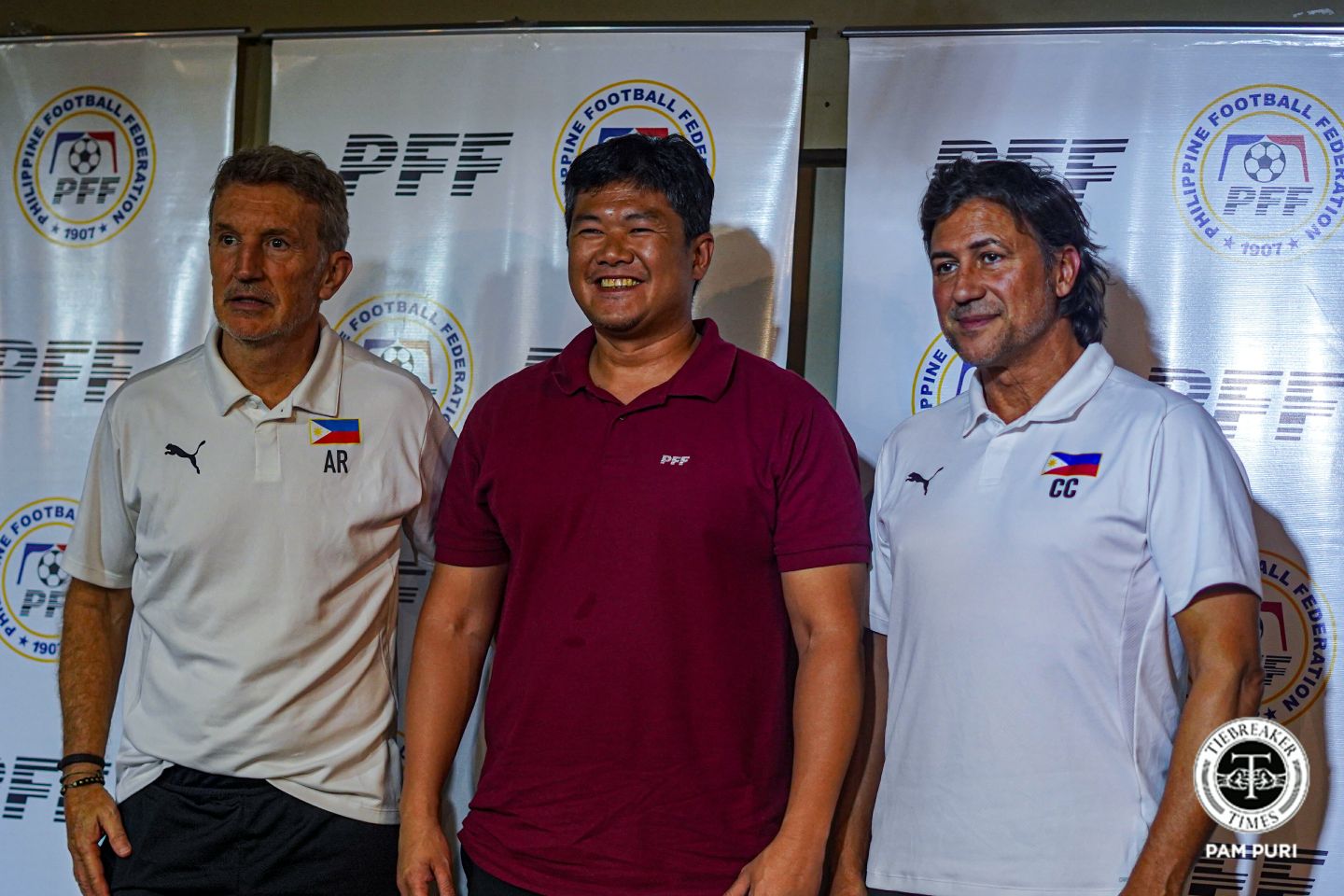

Nearly three months into his role as team manager of the Philippine Men’s National Football Team, Mico Gutierrez is deeply involved in ensuring the team’s stability and success amid a revolving door of coaches and boosters.
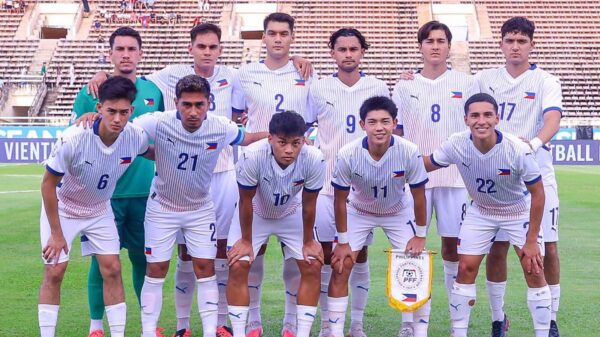
A key factor in any sports team’s success is recruitment. For the squad formerly known as the Azkals, this involves bringing in Filipinos born, raised, and trained abroad to play in friendlies and international tournaments.
Gutierrez, like his predecessors, recognizes the value of Fil-foreign standouts in strengthening the program, saying, “We’re very much welcoming of players from abroad who are Filipino to be part of our team. We are more than happy to see and assess their abilities.”
But executing this is easier said than done. Players representing the country in international competitions must have a valid Filipino passport. For those whose parents have renounced their Filipino citizenship, the process to play for the Philippines is more complicated.
Under Republic Act 9225, or ‘The Philippine Citizenship Retention and Re-acquisition Law of 2003,’ Filipinos must undergo a process to reclaim their citizenship, which then allows their children to obtain a Filipino passport.
“The second step will preferably be done immediately after the parents re-acquire their citizenship with the Filipino children below 18 years old. Hence, there is more than meets the eye when it comes to getting foreign-born Filipinos to play for the country,” Gutierrez explained.
“I know on social media, there have been mentions of the Markanich brothers and the Wolff brothers. Apparently, it’s not as simple as if you have a Filipino mom or a Filipino dad, then you can instantly get a Filipino passport,” he added.
“There are certain rules that, to my understanding, if you are born in a certain year to a Filipino parent who no longer has Filipino citizenship, then for you to get a Filipino passport, you will have to go through naturalization. That is what’s becoming a challenge for us.
“I think for the PFF, it will be good for us to work with the embassies and the consuls of the various nations to let them know we’re looking [for players].”
Ultimately, the process of playing for the Philippines as a foreign-born Filipino is a two-way street. While the PFF and national associations play a significant role in facilitating the pathway, the athletes — or their parents —must also take a proactive approach.
“There is a lot of paperwork to accomplish, and the earlier it gets done, the better, so that the player in question gets integrated across the youth and senior levels faster,” Gutierrez said.
“Just to mention, I’m also involved with U17. After the win in the Lion City tournament, we’ve been getting a lot of interest from players from America, Australia, and Europe who want to take part and join the team,” he added.
“We try to communicate with them as much as we can, and if Fil-foreigners are able to read and see this, if you are interested, work on your Filipino passports. It will be easier for both groups to be able to see if we are a good fit to give the opportunity to play for the country.”
For now, recruitment of foreign-based Filipinos and integration of homegrown talent continues under Gutierrez and national team coach Carlos Cuadrat. Fil-foreign stars boosting the national pool are expected to remain a mainstay for years to come.
“It helps that the PFF has a list of foreign-based standouts it wants to get to represent the country and that coordination is already ongoing for that to come to fruition,” Gutierrez said.
“We have a database of these players and those in the database know the situation.”