
















































































Gilas Pilipinas have found themselves in an early hole at the FIBA Asia Cup 2025 after back-to-back losses to Chinese-Taipei and New Zealand — and a glaring issue has emerged: three-point defense.
Over the course of two games, the Philippines has surrendered a staggering 25 three-pointers on 53 attempts. That’s a combined 47.2% shooting clip from their opponents — an alarming figure that’s quickly becoming the Filipinos’ Achilles’ heel.
“We have to solve that,” admitted Gilas head coach Tim Cone after their 94-86 loss to New Zealand on Friday.
“Chinese-Taipei shot very well from the three the other night and tonight [New Zealand] shot very well from the three. That’s something that we have to get better at heading to our next game and in the tournament.”
On Wednesday, Gilas fell 95-87 to Chinese-Taipei, as Chen Yingchun erupted for 34 points, including a blistering 6-of-8 shooting from downtown.
His rhythm early on buried the Filipinos in a deep deficit, and despite a second-half push, the hole proved too steep to climb.
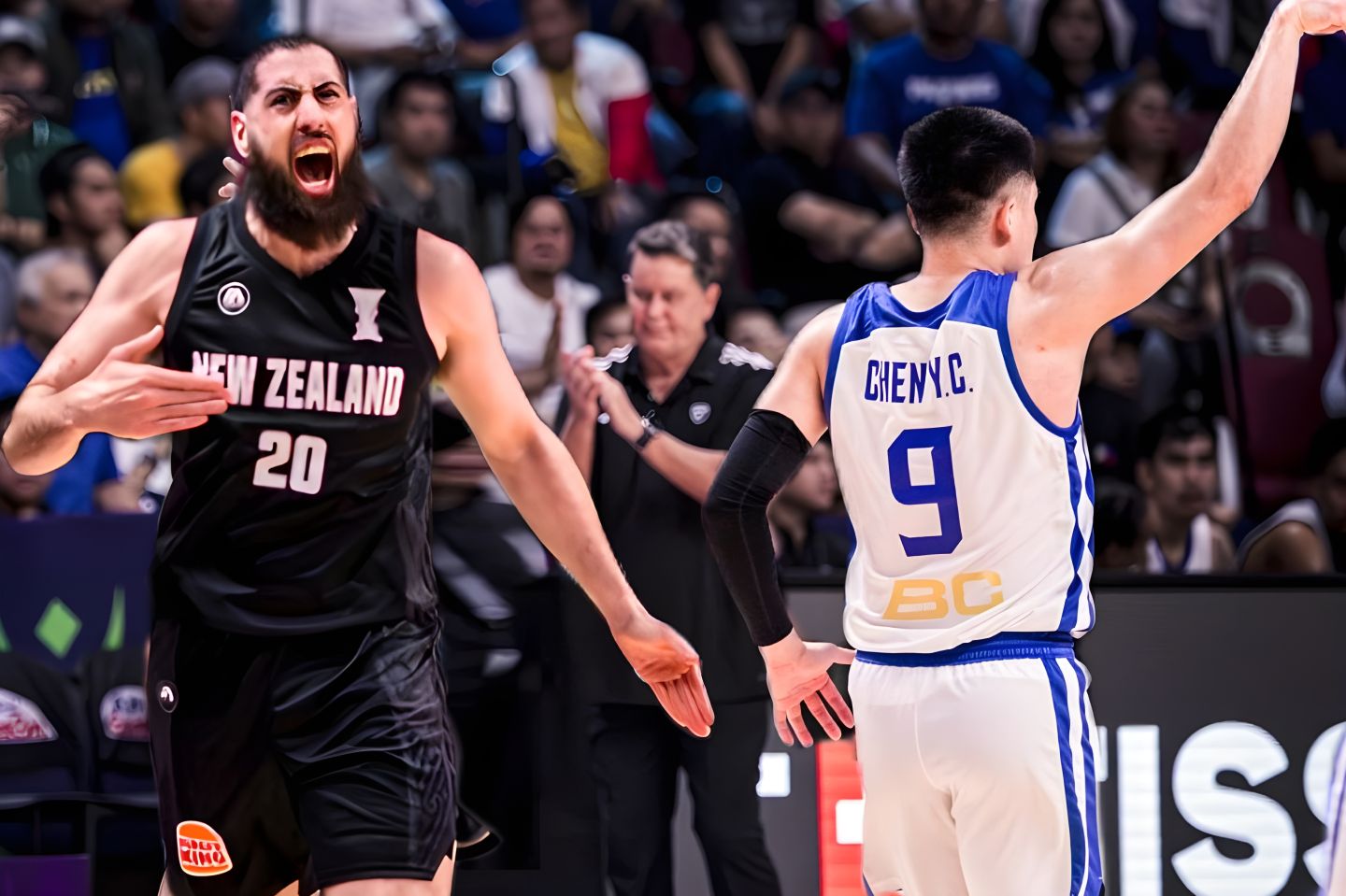
Two days later, it was Jordan Ngatai’s turn to torch Gilas.
The sniper who plays for the Wellington Saints went a perfect 5-of-5 from three en route to 22 points, repeatedly finding open space around Gilas’ spotty perimeter defense.

(C) FIBA.basketball
“We just have to identify shooters a little bit better. We didn’t do that very well in the first half and we did a good job in the second half,” Cone said.
“Ngatai had some open looks early. We knew coming out that he was going to be a shooter and we have to cover him, but we still did not cover him.”
Gilas’ struggles stem not only from missed defensive rotations, but also from a lack of communication on switches — an area Cone emphasized they need to work on.
“I think we just got on screens a little bit better and they were doing a really great job of adjusting to our defense early,” he explained.
“We were switching and they were slipping screens and we made the adjustment better in the second half.”
Cone utilized a zone defense in the latter stages of the game, primarily to protect June Mar Fajardo from having to recover on high ball screens.
The switch showed promise, but Taylor Britt and the rest of the Tall Blacks started attacking the paint.
“I thought the zone surprised them a little bit. We ran that basically for June Mar so he can not get extended on the ball screens,” Cone shared.
“But still, we gave up, in my mind, too many layups in the game.”
New Zealand, like Chinese-Taipei before them, shot a blistering 50% from beyond the arc.
Even players not known for their outside touch found the range — including a surprising triple from 6-foot-9 Jack Andrew late in the first half that gave the Tall Blacks their largest lead of the game.
“It just seems to be that’s the way how the game is going for us lately,” said Cone.
Beyond scouting, Cone believes the root cause may be more mental than tactical.
“To me, it’s just more mental adjustments than anything else,” he said.
“Just something that we got to continue talking about and work on and try to figure out why teams are shooting so well.”

(C) FIBA
Cone pointed out the little things that pile up — lost rebounds, 50-50 balls, and extra possessions that allow their opponents more chances to fire from long range.
“It’s all going to be about the mental — getting loose balls, getting loose rebounds, and not allowing the extra possessions to get the three-point shots up,” he said.
“Hopefully, we can turn it around. We have to.”
Now, there’s no more room for error.
Gilas face a do-or-die showdown against Iraq in their final group stage game — a win-or-go-home situation that could define their entire Asia Cup campaign.