




























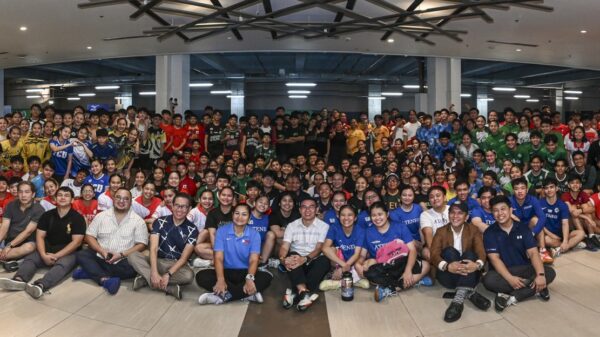







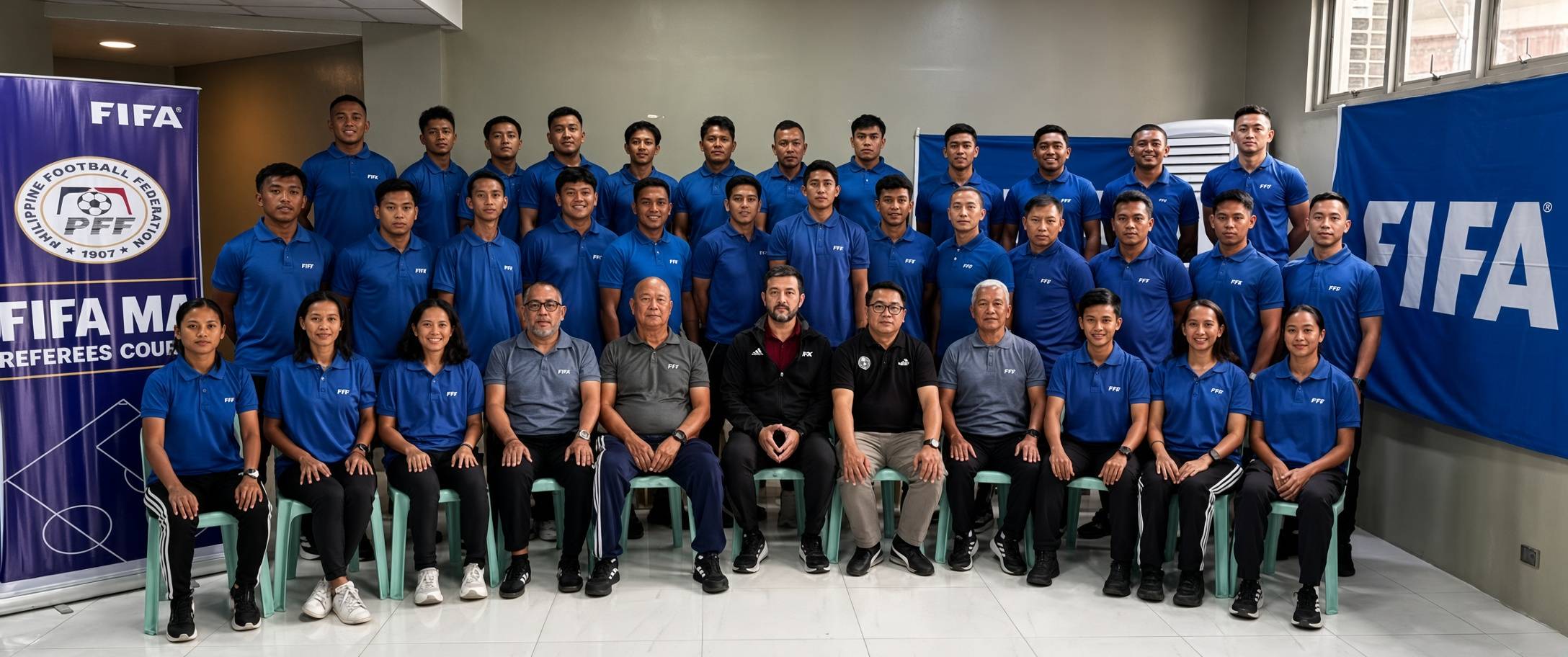

The Philippine Football Federation successfully concluded the FIFA MA Referees Course 2026 on September 17 at the Rizal Memorial Stadium in Manila, capping a five-day program that brought together 31 participants from 17 Regional Football Associations across Luzon, Visayas, and Mindanao.
Led by FIFA Referee Instructor Farkhad Abdullaev of Uzbekistan, the course combined classroom instruction, video technique sessions, and on-field practical training as part of the PFF’s continuing efforts to raise the standard of officiating nationwide and align local referees with FIFA’s evolving interpretation of the Laws of the Game.
PFF President John Gutierrez lauded the initiative as part of the federation’s broader push to professionalize Philippine football at every level.
“Referees are the backbone of a well-run competition, and courses like this show our commitment to giving them the tools they need to officiate with confidence and integrity,” Gutierrez said. “Every investment we make in our match officials is an investment in the credibility and growth of the sport in our country.
PFF General Secretary Gelix Mercader, who attended the closing session, congratulated the participants and reminded the referees of the responsibility that comes with their role.
“As match officials, the decisions you make in the field not only impact the game you are officiating, but also football development in the country. Young players will look up to you and rely on your judgement for their safety and how they learn the game, and they will carry this with them as they grow. So always bear in mind that as you officiate, you are also educating our players.”
Mercader also thanked Abdullaev for his time and welcomed the opportunity to collaborate with the Uzbekistan Football Association.
“With this and future collaboration with UFA, there’s so much we can learn from their experts, their First Vice-President Ravshan Irmatov is a former top FIFA referee with 11 FIFA World Cup appearances,” Mercader continued.
(C) PFF
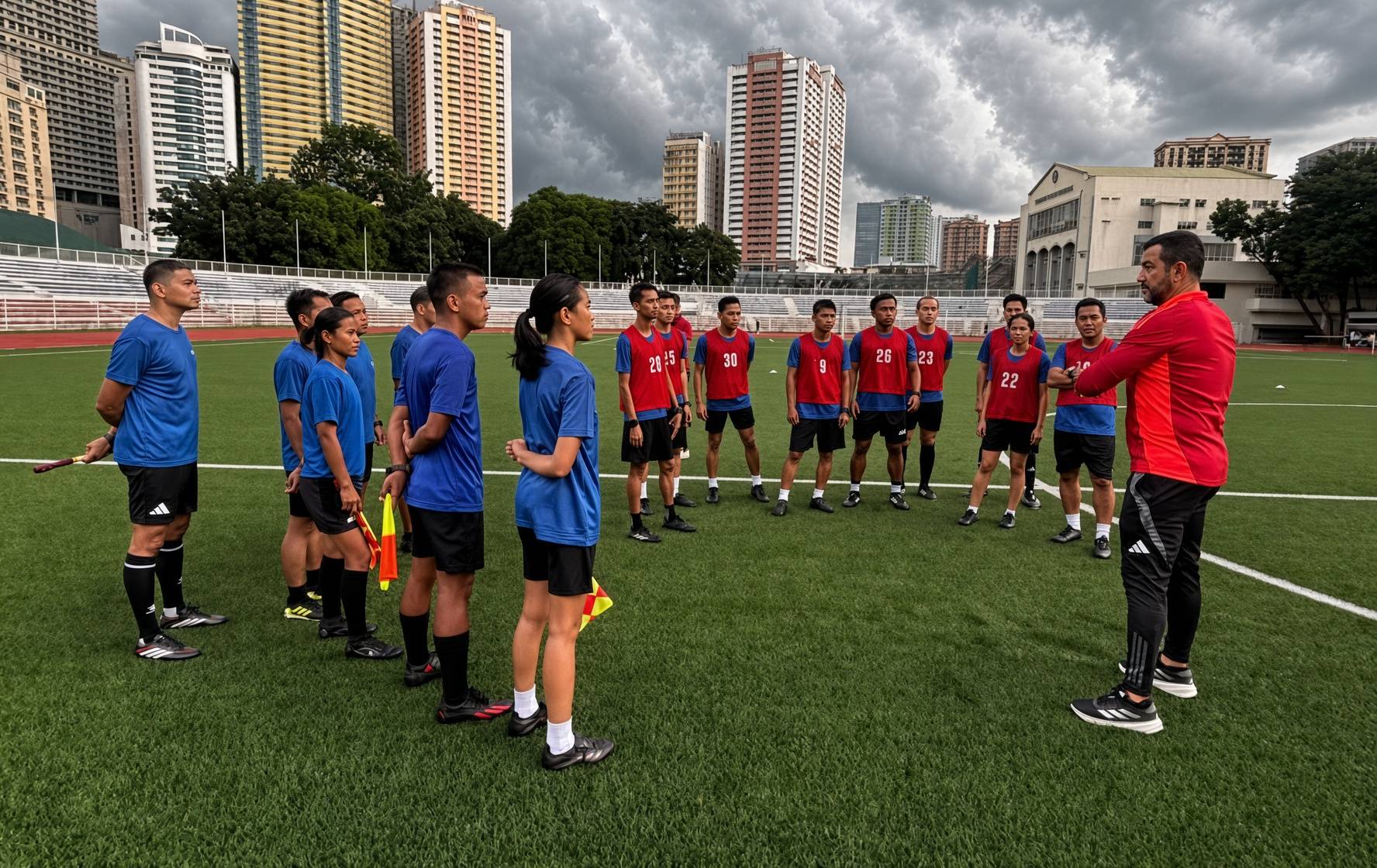
The five-day program followed a structured curriculum designed to strengthen both technical understanding and physical readiness, with FIFA Refereeing Education (FIFA RED) teaching materials used throughout the course.
The course opened on September 13 with an opening ceremony, followed by sessions on the amendments to the Laws of the Game for 2026/27. Participants also underwent video technique training on Penalty Area Incidents and Challenges, followed by discussions on the two focus areas before a practical session with players and fitness training in the afternoon.
Day two shifted the focus to Handball and Tactical Fouls (HB and TF), with video technique sessions in the morning, discussions on the two areas, and a fitness test in the afternoon.
The third day tackled Offside through video technique training and discussion.
On September 16, participants underwent a full day of video technique analysis covering all five focus areas — PAI, CHA, HB, TF, and OFS — before a final practical and fitness session in the evening.
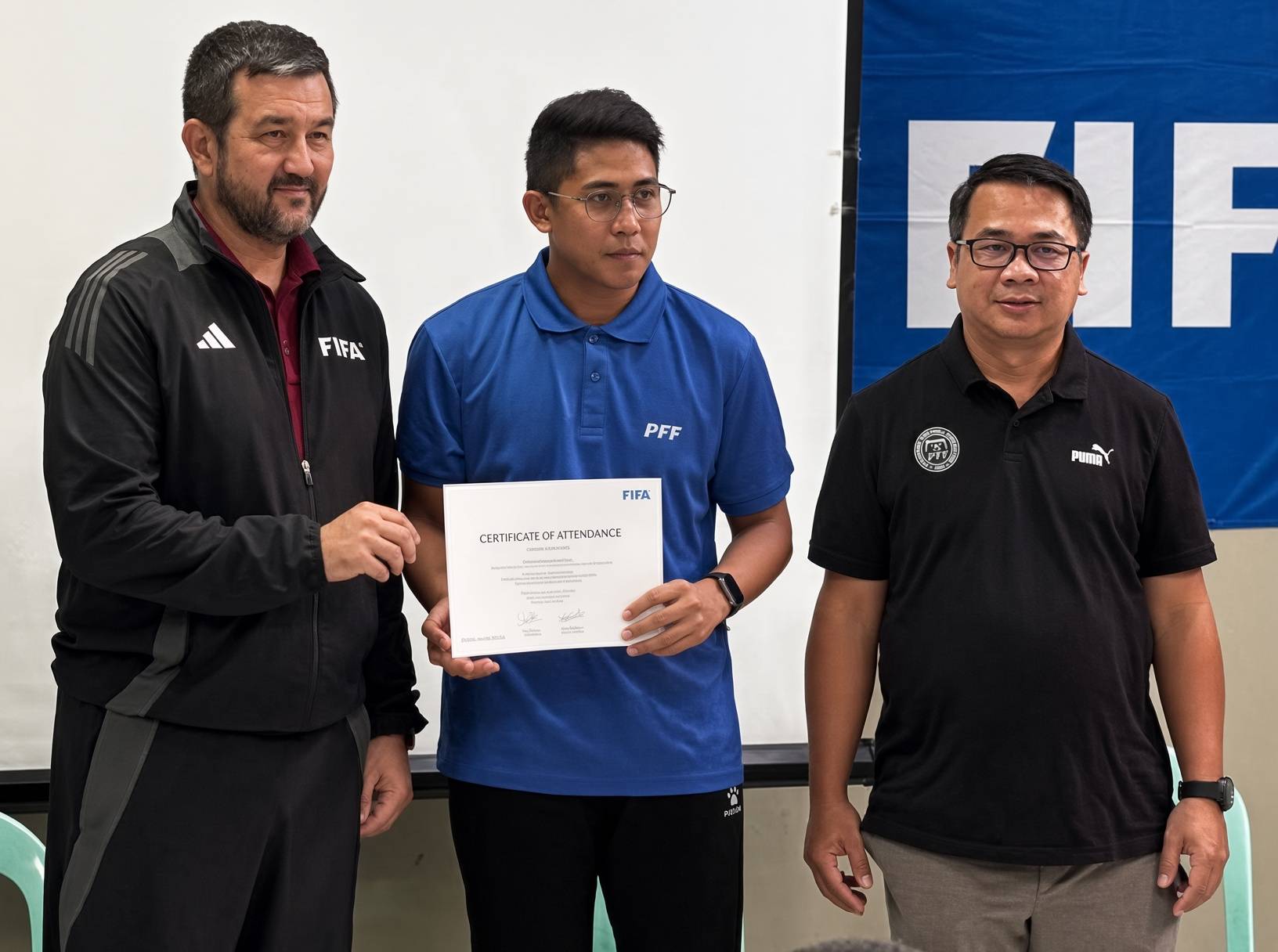
The course concluded on September 17 with a session on match management, a summary of the week’s lessons, and a formal closing ceremony.
Instructor Abdullaev commended the participants for their dedication throughout the week.
“Today we completed a five-day course, and I was happy to see the discipline, commitment, and enthusiasm in the referees’ eyes,” he said. “Seeing such talented boys and girls with this level of dedication gives them a great chance to go higher and make a lasting, positive impact on Philippine football.”
He left the group with a challenge to carry forward:
(C) PFF
“Don’t look for motivation outside — it should come from inside as we keep pushing forward.”
PFF Referees Department Committee member Virgilio Imperial closed the course with a reminder that the real test begins once the referees return to the pitch.
Imperial identified three challenges that separate classroom mastery from match-day execution: the split-second pressure of applying new interpretation guidelines under maximum tension, where even well-prepared officials can stumble; the difficulty of maintaining consistency between calm video analysis and decision-making under fatigue in the late stages of a match; and the risk of reverting to old habits once referees return to working in isolation, away from the course cohort.
To guard against this, Imperial urged the referees to treat the course as an investment rather than simply a credential.
“The real value of this course isn’t measured by the certificate in your bag—it’s measured by your Return on Investment when you step back onto the pitch,” he said, stressing that the ROI of the week “drops to zero” if participants fail to apply what they learned in their very next match.
He also called on the referees to elevate the standard within their own associations by mentoring younger officials and sharing what they had learned. He further encouraged them to build a lasting feedback loop by staying connected with one another, reviewing clips together, and holding each other accountable to FIFA standards long after the course had ended.
The course was supported by Roberto Hernandez and Dennis Estaniel as Referee Assessors, Ariel Montaña as Fitness Instructor, Bayani Jose Abad and Virgilio Imperial as Committee members, and Mark Abel De Castro as Referee Administration Manager.
PFF looks forward to seeing the newly trained officials carry these lessons back to their respective regions, strengthening the pipeline of qualified, FIFA-aligned match officials across the country.