








































All eyes were on Japan on Wednesday night.
Fans flocked to the Smart Araneta Coliseum to witness the Ryujin Nippon cap off a disappointing run with a win, and they gladly delivered.
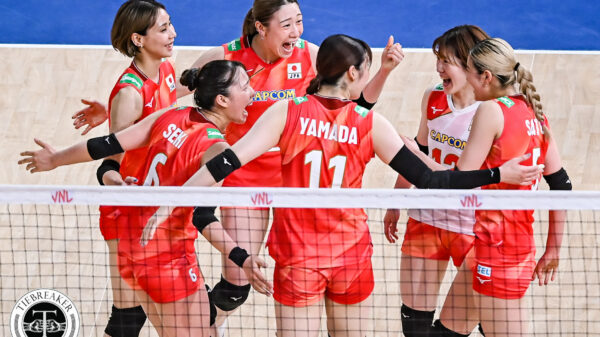
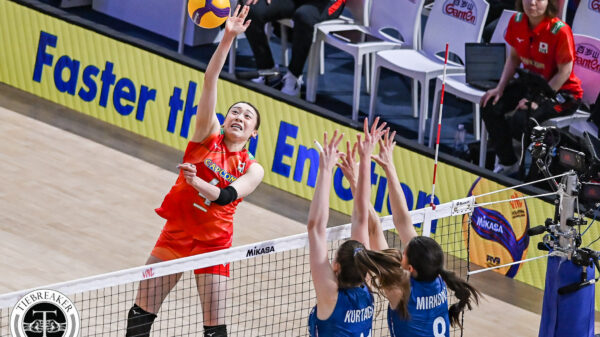
The team overwhelmed Libya — who returned to the FIVB Volleyball Men’s World Championship after 43 long years — in straight sets, 25-20, 25-17, 25-12.
For a team once considered among the favorites to go deep, the triumph carried added significance. Japan had stumbled at the start of the tournament, suffering back-to-back sweeps at the hands of Turkiye and Canada that effectively ended their hopes of advancing.
Relief swept through Japan’s camp as they finally secured their first win of the tournament, sending Filipino and foreign fans inside the historic arena into a frenzy.
But as the crowd reveled in Japan’s much-awaited breakthrough, the spotlight subtly shifted.
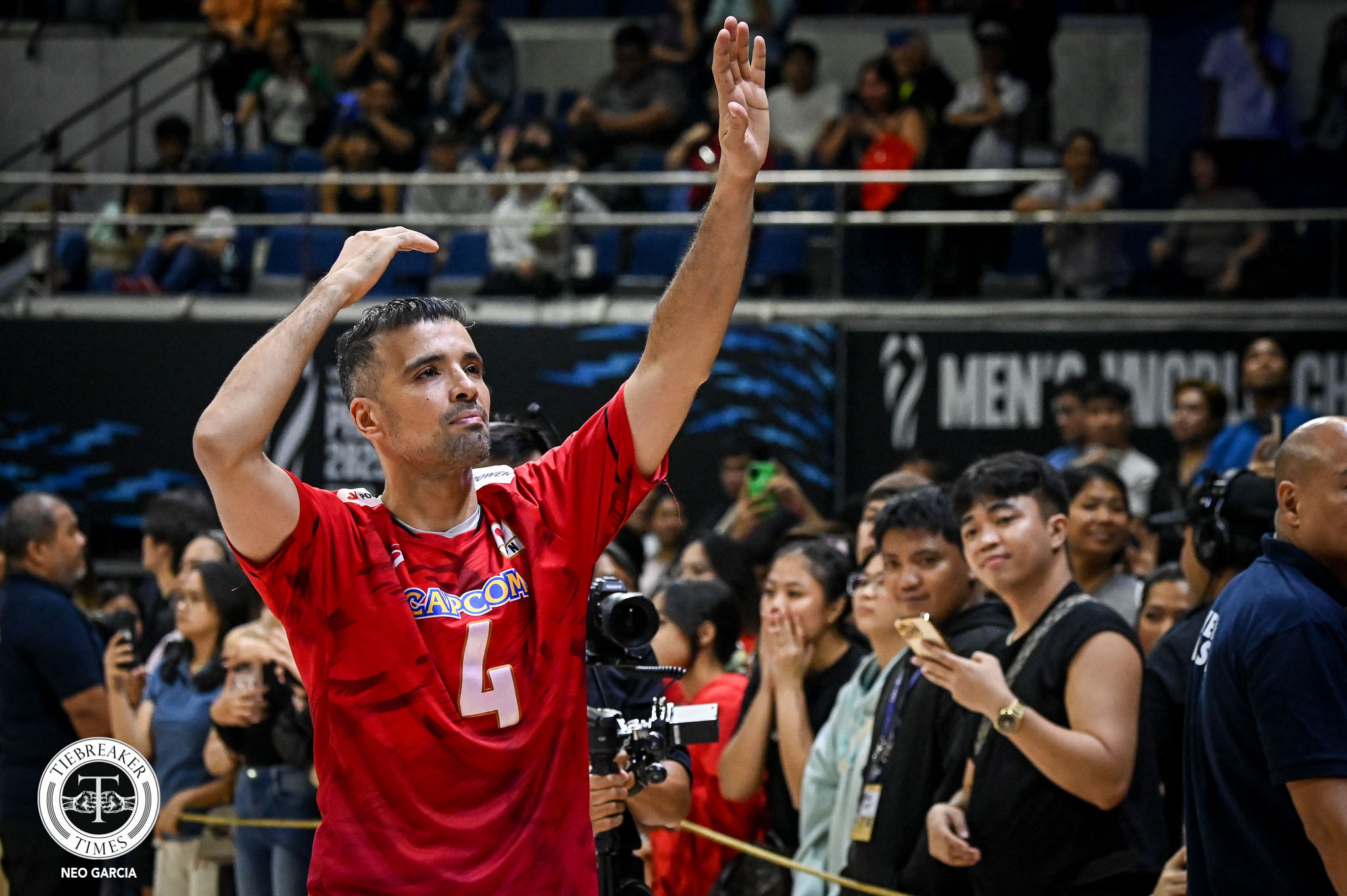
On the opposite side of the court, Foad Elmaaruug — Libya’s captain, the tournament’s oldest player, and the symbol of their improbable return — quietly played his last final match with the national team.
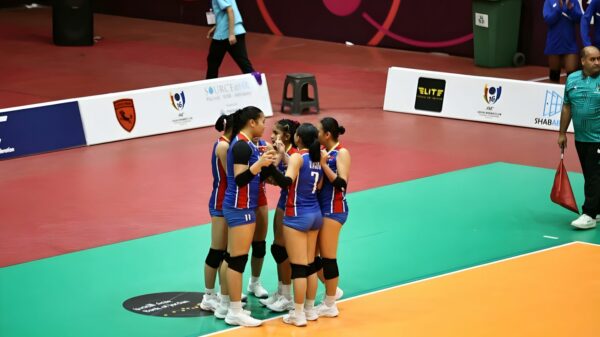
At the end of the huddle, he tied his sneakers together. He hung them in the middle of the net — a symbol of farewell, marking the close of an era for Libyan volleyball and the curtain call of a player who carried his country back to the world stage after more than four decades.
Moments later, his teammates gathered around him once more. They lifted their captain high into the air in celebration of his service, giving him a send-off worthy of his sacrifice and leadership.
“This is the first time that we are here after so many times. We were waiting for this chance to be here,” said an emotional Elmaaruug through a translator.
“I hope that Libya will show amazing play [in the future] and play more stronger in competitions and be in every competition,” he added.
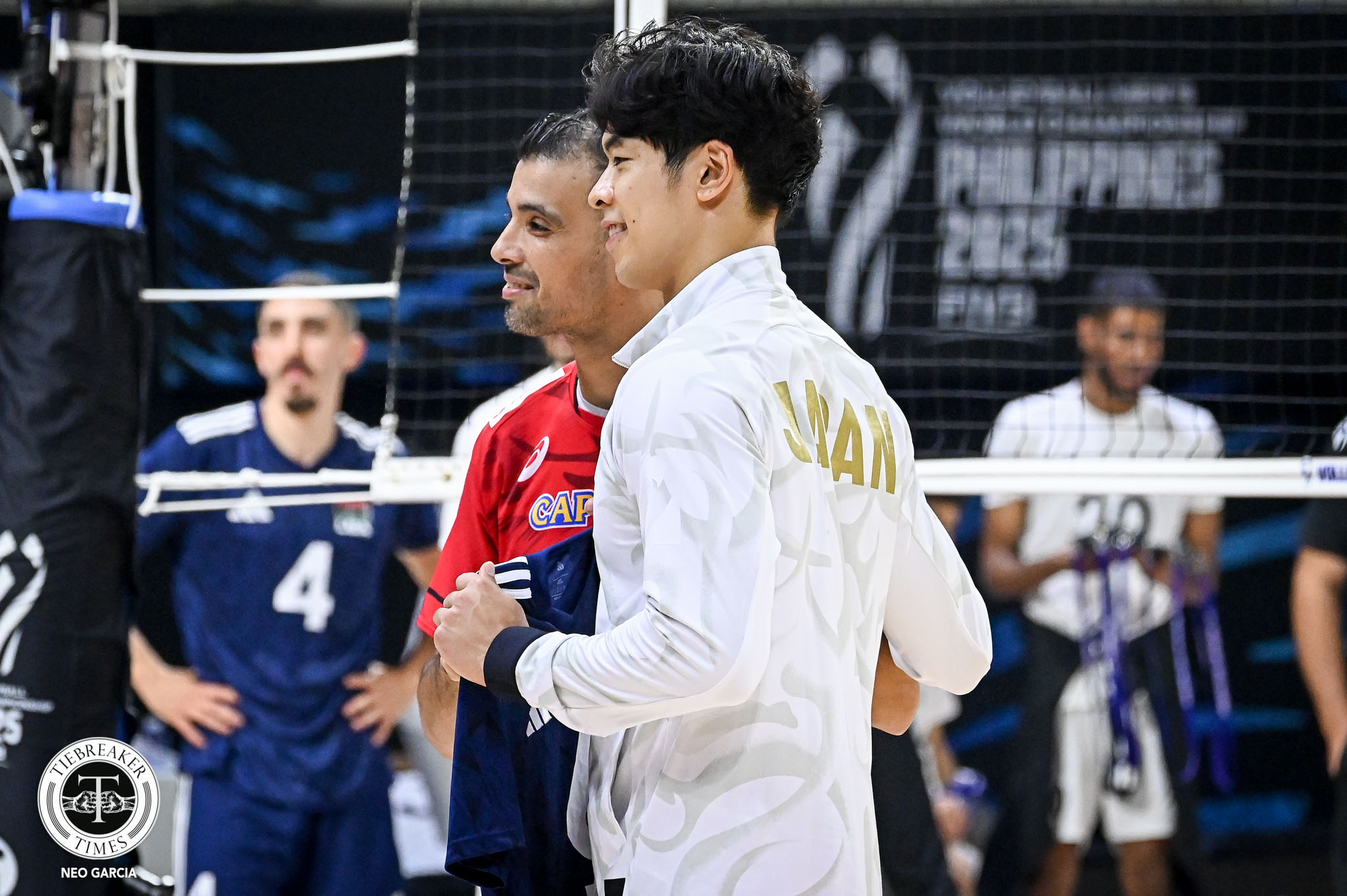
In his first and final trip to the World Championship court, Elmaaruug made sure to take home a keepsake — exchanging jerseys with Japan star Kento Miyaura, not for fame or status, but because the young spiker bore a striking resemblance to his own son.
“Japan’s player number four looks exactly like my son. He’s left-handed, and Kento Miyaura is also left-handed. When we came here, I decided I would exchange jerseys with him and bring it back home to my son,” he fondly shared.
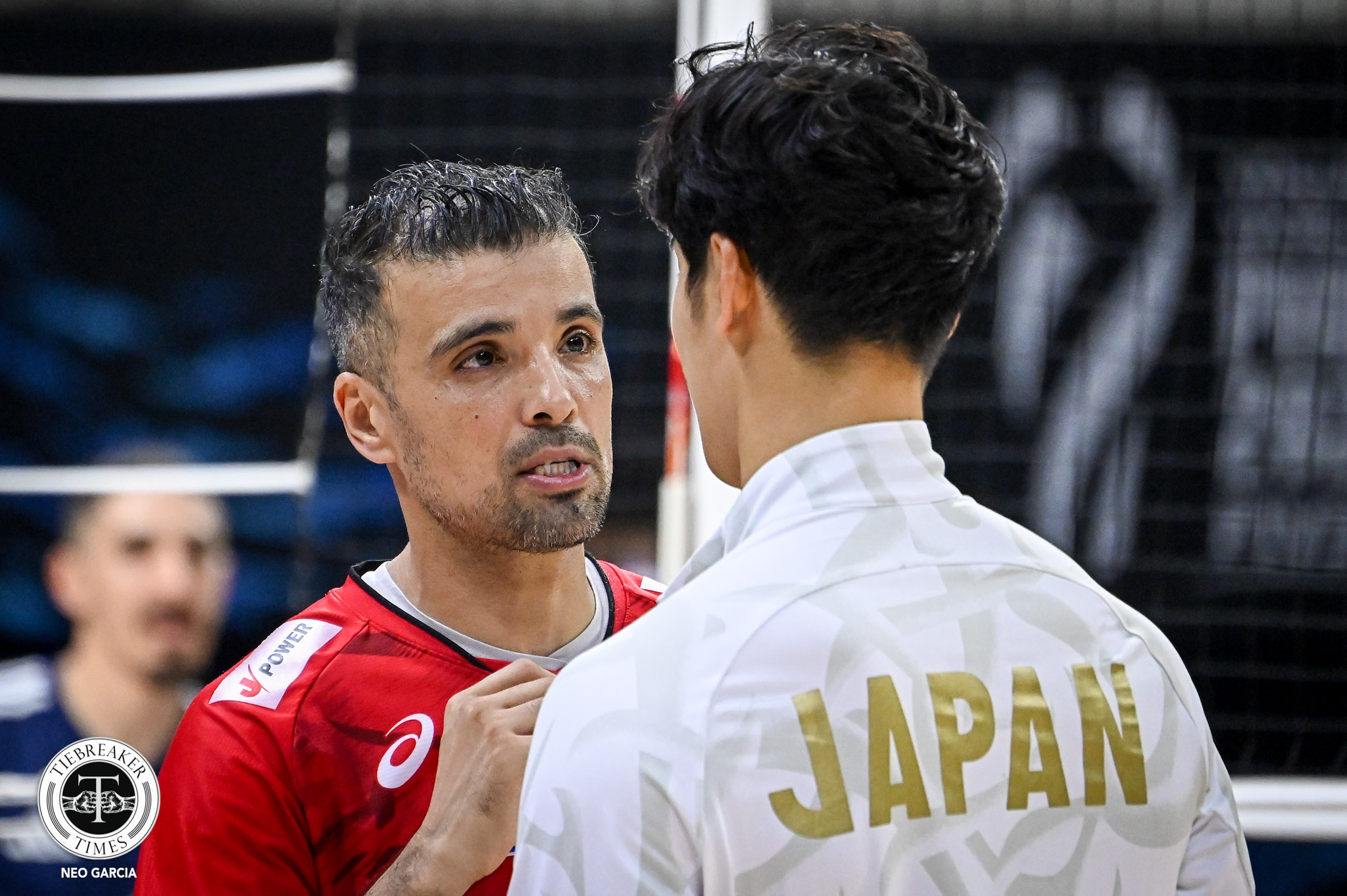
For Elmaaruug, the jersey exchange was a touching personal memory, but the night carried a deeper meaning. His final bow did not just mark the end of his own journey — it signaled the beginning of something larger for Libyan volleyball.
Their return to the world stage for the first time since 1982, led by their oldest warrior, became a foundation to build on. It is also a reminder that while one era has closed, a new one now waits to be written.
“To the Libyan people watching us, be proud of your team. It’s true that we lost, but you will see a more stronger team in the future,” said Elmaaruug.
All eyes were indeed on Japan on Wednesday.
But on a night when Libya was expected to be just a sidepiece to someone else’s story, Elmaaruug unexpectedly claimed a share of the spotlight.
And he hopes that people take notice — not just of his farewell, but of a Libyan team determined to rise again, to make sure their long-awaited return to the world stage will not be their last.
“I promise, these faces, you will see them in the next [World] Championship.”
#WATCH: Kento Miyaura honored Libya captain Foad Elmaarug, 42, the oldest player in MWCH 2025, with a memorable jersey swap! 🇯🇵🇱🇾🏐
📹 @ErnestTuazon /Tiebreaker Times pic.twitter.com/fBYZX4kU41
— Tiebreaker Times (@tiebreakertimes) September 17, 2025